Attorney General Greg Abbott sues the Texas Highway Patrol Museum in San Antonio

December 20th, 2011 by John Tedesco

The Texas attorney general’s office announced yesterday that it has sued the Texas Highway Patrol Museum, a nonprofit telemarketing organization based in San Antonio that raises millions of dollars in the name of helping state troopers.

I had always been curious about the museum, which is housed in a brick building at St. Mary’s and Alamo streets but attracts few visitors. In October, we examined the museum’s tax records and found that only a fraction of the nearly $12 million in revenue raised by the museum’s telemarketers actually went towards the charitable causes it touted. For every dollar raised, less than a penny was spent on Department of Public Safety troopers and their families.

Attorney General Greg Abbott’s lawsuit reveals new details about what, exactly, donors’ money was spent on. State investigators obtained financial information and credit card statements from the museum, and found employees had paid for cigars, liquor, vacations, meals and “exorbitant” vet bills for an “office cat.” The lawsuit describes an organization with few controls over how money was spent, and an absentee board that seldom asked questions.

Here’s an annotated copy of the lawsuit:


In our last story, I interviewed Scott Henson at the criminal justice blog Grits for Breakfast, who had received a telemarketing call from the museum in August. Scott wasn’t happy that the caller initially claimed to be with the Texas Highway Patrol — as if the caller were really with the Department of Public Safety. “This group is about as much about helping troopers as buzzards are about helping roadkill,” Scott wrote at the time. He called yesterday’s lawsuit “way past time.”

The museum’s assets have been frozen and it’s been closed since Friday. Its lawyer, Kim Brown, called the lawsuit “heavy handed” and said the expenses were justified.

What about the cigars?

Prizes for telemarketers, he said.

Liquor?

Drinks for office parties.

The office cat?

The vet bills for the cat were unavoidable.

The lawsuit lays out more expenses for trips, meals and cars that the state describes as wasteful spending. But Brown said the museum is hardly a fly-by-night organization that defrauds people. The small museum has operated in San Antonio for years, he said, and while it has high overhead costs, it does spend money on charitable causes.

The attorney general is seeking to dissolve the nonprofit museum and its related entities. The next step is a hearing for a temporary injunction that has yet to be scheduled.

Here’s a searchable library of all primary documents we’ve obtained about the museum. If you’ve had any experiences with the museum or its telemarketers, feel free to contact us.


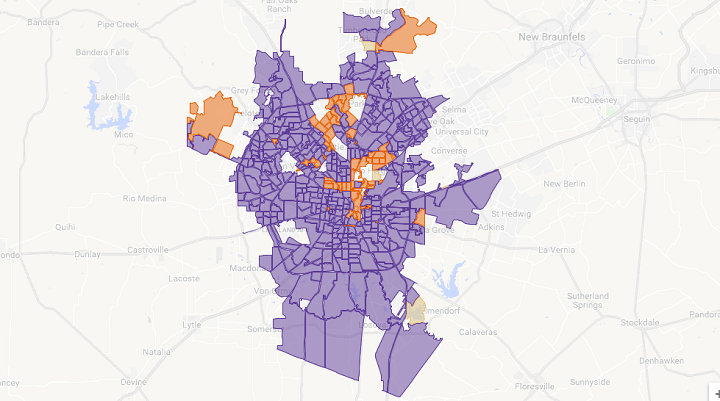
Impact of the recession: Google map shows Texas food stamp recipients, by neighborhood

November 20th, 2011 by John Tedesco

One of the golden rules of writing is show, don’t tell. The same holds true for stories based on public data. Check out this cool interactive map by Nolan Hicks and Yang Wang showing food stamp recipients by Zip code for the whole state of Texas.

Watchdog blog roundup for 11-20-11

November 20th, 2011 by John Tedesco

Printing Press

What others are saying about watchdog journalism …

  • Successful watchdog sites focus on audience engagement | Block By Block
  • A healthy future for investigative journalism | Steve Buttry
  • Memo to IRS: Get out of the way | American Journalism Review
  • The end of the scoop | Hannah Waldram
  • Finding new models for investigative journalism | California Watch
  • How to do a confrontational interview: Bob Costas grills Jerry Sandusky

    November 15th, 2011 by John Tedesco

    Visit msnbc.com for breaking news, world news, and news about the economy

    Bob Costas’ grilling of accused Penn State child molester Jerry Sandusky should be mandatory viewing for all journalism students who want to learn how to handle a confrontational interview.

    Costas wielded a strong command of the facts. Listened intently to each answer. Asked focused questions and follow-up questions. And he wasn’t satisfied with vague proclamations of innocence.

    Years of cable news have brainwashed viewers into thinking a confrontational interview involves talking heads bullying and yelling at people.

    Not true. Costas shows you can be polite — and tough — at the same time.

    ‘I’m an investigative reporter. And you’re busted’

    November 3rd, 2011 by John Tedesco

    Flustered locksmith dude: “Like, what are you doing? I don’t know … what’s going on?”

    Reporter uncovering locksmith scam
    : “My name is Brian Collister. I’m with the Trouble Shooters. I’m an investigative reporter. And you’re busted.”

    Texas Week’s Rick Casey focuses on the Texas Highway Patrol Museum

    October 17th, 2011 by John Tedesco

    Watch October 14, 2011 | Texas Highway Patrol Museum: Fundraising Questions on PBS. See more from Texas Week.

    Many thanks to Rick Casey, Bruce Kates, and the staff at KLRN’s Texas Week for having me on their show to talk about the Texas Highway Patrol Museum and its little-known purpose as a telemarketing operation.

    Texas Highway Patrol Museum raises millions — but spends little money on DPS troopers

    October 13th, 2011 by John Tedesco

    The Texas Highway Patrol Museum sits on a prime piece of property near downtown San Antonio, across the street from Rosario’s CafĂ© y Cantina. Business is booming at Rosario’s, but not so much at the museum. It usually looks empty every time I drive by or hang out in King William. I’ve been kind of curious what their deal is.

    After I wrote about delays and conflicts at the Briscoe Western Art Museum last month, Express-News police reporter Michelle Mondo suggested I take a look at the highway patrol museum. It sounded interesting.

    A quick Google search showed that others had asked similar questions about the museum over the years and discovered red flags. Amy Davis, a TV reporter who used to work in San Antonio and now works in Houston, investigated the museum in April 2008 and produced this in-depth report. Davis found that the museum was actually a telemarketing operation, and she interviewed a former employee who said the group spent little money on troopers with the Texas Department of Public Safety. The KSAT Defenders produced a similar report later that year.

    More recently, Scott Henson at Grits for Breakfast blogged about a phone call he received from a telemarketer who said he worked for the “Texas Highway Patrol.” Henson asked if he meant DPS — and the caller said yes. It’s a big no-no to falsely claim to be affiliated with a law enforcement agency.

    What does DPS, the government agency that employs state troopers, think about the museum? Not much. The agency’s website has a general warning about giving money to telemarketers — but it also has a web page that focuses on the highway patrol museum in San Antonio. DPS criticizes the exhibits, puts “museum” in quotes and warns the public not to give it money.

    All this adds up to a good story that people need to know about.

    The museum is a nonprofit organization, so its tax records are open to the public. Guidestar offers free access to the three most recent years of tax returns for most nonprofit organizations. The Express-News has an account with Guidestar that gives us access to even more tax returns, which offers a treasure trove of historical information about charities.


    Database Editor Kelly Guckian logged into Guidestar and got me copies of everything available for the Texas Highway Patrol Museum and a related entity, the Texas Highway Patrol Association. The two organizations share the same board members, and both were founded by Lane Denton, a former state representative from Waco who was found guilty of stealing money from a different law enforcement charity.

    The museum is the telemarketing arm of the partnership. It employed more than 380 people in 2009, most of whom worked at call centers in El Paso, Austin and Houston. The association provides benefits to state troopers.

    A brochure states the group gives the “finest benefits possible” to troopers. But looking at a five-year span of tax returns showed that while benefits were indeed paid to troopers and their families, they were only a fraction of the total revenues raked in by the museum’s telemarketers.

    I typed all the financial information into a spreadsheet. Here are the numbers:

    Donors gave nearly $12 million to the museum, but the association gave only $65,300 to DPS troopers and their families. That’s half a penny for every dollar raised.

    Yet when telemarketers call potential donors, they often refer to recently killed troopers by name, pull heart-strings, and lead people to believe that most of their money is actually going to help the people who need it. That happened to the friend of David Slaton, a trooper who died last year in a car accident. The telemarketing call hit her hard.

    My story about the museum ran Sunday and many outraged readers responded that they had received telemarketing calls from this organization and others.

    What do people with the museum have to say about all this? The employees I spoke with were friendly, and the director of marketing who oversees the telemarketing operation basically described it as a necessary evil. There’s overhead, he said, but without the telemarketing calls, no money would be coming in at all.

    But there are more effective ways to help peace officers. Slaton’s friend told me she was impressed by the 100 Club of Houston, which does not raise money through telemarketers. It relies on membership donations, and according to its tax returns, it gave about $1 million in survivor benefits last year.

    Rick Hartley, executive director of the 100 Club, said the group has no plans whatsoever to try telemarketing.

    It’s not worth the blow to their credibility.

    Remembering the Alamo — and the media’s role in its fate

    September 26th, 2011 by John Tedesco

    Reading Scott Huddleston’s latest update about the turmoil at the Alamo, I wondered how many people remember the roots of the problem and why the state of Texas got involved in the first place. I doubt casual readers know Scott deserves some of the credit for the changes — or the blame, depending on how you view the Alamo’s caretakers, the Daughters of the Republic of Texas.

    Scott Huddleston, reporter for the San Antonio Express-News

    Huddleston

    Newspapers are very good at producing something we all know: the news article. But Scott has been writing article after article about the problems at the Alamo. In fact, his first story was published two years ago. Like many newspapers, we haven’t done a very good job tying those stories together online to give readers the context and history of the controversy. We’re not answering a basic question about the issue: How did we get here?

    Scott got involved when a tipster told him that some members of the Daughters of the Republic of Texas questioned the group’s leadership, and were forming their own splinter group to raise money for the Alamo.

    “I wanted the story to be more than ‘she said, she said,’” Scott told me. He began obtaining copies of contracts, emails, letters — anything that would shed light on what was going on at the Alamo. He found examples of questionable spending and a lack of focus. “Their biggest challenge was an inability to raise money for capital improvements,” Scott said.

    Sometimes a story is bigger than a single article
    Before his first article was published, Scott heard that the Dallas Morning News was working on its own story about troubles at the Alamo. Nothing gets a reporter’s heart pumping like another reporter chasing down the same story. He kept digging, partly because he didn’t want to get scooped by the Morning News.

    “I felt like I needed to be shaking the bushes just to keep up with them,” Scott said.

    After his first story about the rift was published, he filed an open records request with the state of Texas to find out how the Daughters were spending funds raised from license plates with Alamo themes. It turned out the Alamo only received a portion of the funds for upkeep.

    As more members of the Daughters publicly criticized the group’s leadership, some were expelled for speaking with the media, which led to more follow-up stories.

    Scott wrote at least 60 articles in the past two years that mentioned the Alamo and its troubled caretaker.
    “They deserve a lot of credit,” Scott said of the outspoken critics. State Sen. Leticia Van de Putte, D-San Antonio, also took a keen interest in the issue and eventually wrote a bill that shifted more oversight of the Alamo to the state. The bill became law on Sept. 1 and significantly altered the role of the Daughters. The Texas General Land Office now oversees the Alamo, and will determine what role the Daughters will play as a contractor of the state. If a contract between the state and the Daughters isn’t signed by Jan. 1, control of the Alamo and the site’s equipment and property acquired with state funds must be transferred to the Land Office.

    Scott wrote at least 60 articles in the past two years that mentioned the Alamo and its troubled caretaker. Most stories were about the turmoil within the organization and its track record at the Alamo. For long, seemingly never-ending sagas like this, newspapers really need to devise a way to help readers see the whole picture.

    Google’s Living Stories project tried to address this problem. It’s no longer supported but it inspired ProPublica to generate a similar design that gives readers a timeline and easy access to past posts about the topic they’re interested in.

    Dipity is also cool — I made this timeline compiling most of Scott’s stories.

    It’d be great if newspapers came up with something like Living Stories. Sometimes a story is bigger than a single article. We ought to figure out a way to systematically tell that story in a compelling way.

    Watchdog blog roundup for 9-26-11

    September 26th, 2011 by John Tedesco

    Close-up of a centuries-old handpress

    What others are saying about watchdog journalism:

  • Can YouTube save investigative journalism? | The Conversation
    Reaching more people through online video.
  • Investigative journalism’s future depends on partnerships, public data
    | Poynter
    How do we hold the powerful accountable in the midst of hard times?
  • Mundane reality behind the myth of the dashing, devil-may-care super sleuths | CUtoday
    Contrary to popular belief, investigative reporting is “boring hours in libraries, looking things up, tracing people, studying court reports, attending legal conferences, typing up memos and listening to outlandish conspiracy theories.”
  • ProPublica’s Scott Klein: news apps don’t just tell a story, they tell your story | editorsweblog
    How news apps can show readers how a story relates directly to them.
  • Two Express-News editors abruptly resign

    September 22nd, 2011 by John Tedesco

    There’s nothing quite like Storify to document the craziness of a breaking news story. So here’s a timeline about the departure of Editor Robert Rivard and No. 2 Editor Brett Thacker, who both resigned in the span of two days. Their sudden departure shocked the newsroom.