Archive for the ‘Express-News Stories’ Category

San Antonio Express-News launches paywall

Sunday, May 5th, 2013

San Antonio Express-News building

Photo credit: Sean McGee

Our new paid site was unveiled today. We still have the free site at mysanantonio.com that will offer things like breaking news, entertainment and event calendars. But in-depth stories and other features will now be tucked behind a paywall at Expressnews.com.

I’m not sure how I feel about paywalls on news sites, but I see some upsides. Thanks to the paywall, we don’t have to chase page views, so there’s no link bait or bikini-babe slideshows. There’s no extra cost for print subscribers, which rewards them for buying the newspaper. And the new site looks drop-dead gorgeous. It’s actually a pleasure to read without the distracting flash ads.

This is an interesting strategy. Mysanantonio.com will be free and post potentially viral content, while Expressnews.com will, hopefully, generate revenue from subscribers.

What do you think?

Officials and fertilizer company didn’t predict massive explosion that devastated West, Texas

Friday, April 19th, 2013

This slideshow requires JavaScript.

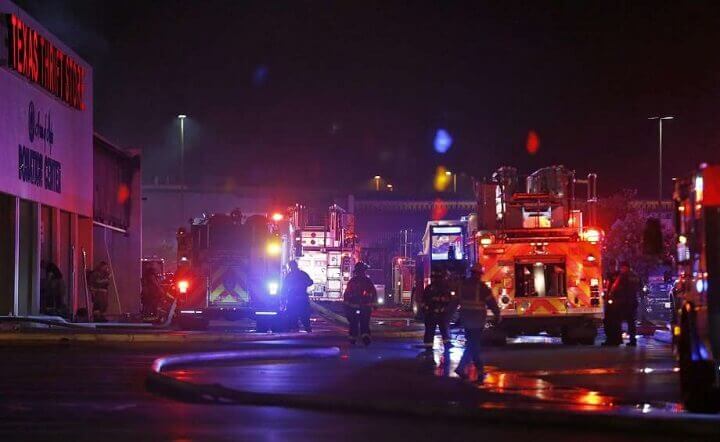
Here’s what we know about the track record of West Fertilizer, the site of yesterday’s blast that devastated the town of West, Texas, with the force of an earthquake.

Reliving the Battle of the Alamo

Monday, March 11th, 2013

I got to spend Sunday afternoon with members of the San Antonio Living History Association, who reenacted the historic battle of the Alamo and showed onlookers what life was like 177 years ago. This was heaven for history buffs.

Texas Week examines dangers facing oil-and-gas workers on the Eagle Ford Shale

Sunday, February 24th, 2013

Watch February 22, 2013 | Eagle Ford Safety Issues on PBS. See more from Texas Week.

Many thanks to Rick Casey, Bruce Kates and the folks at KLRN’s Texas Week for inviting me to discuss the dangers facing oil-and-gas workers on the Eagle Ford Shale. At least 11 workers have suffered horrible but preventable deaths since 2009.

Workers dying on the Eagle Ford Shale

Saturday, February 16th, 2013


View Workers dying on the Eagle Ford Shale in a larger map

The Eagle Ford Shale boom is pumping billions of dollars into South Texas. But it carries a steep cost. Our story tomorrow is about the workers who have suffered horrific, preventable deaths at drilling sites. You can see where employees have died and read the federal inspection records about the accidents in this interactive map.

If you work in the industry and want to share tips or concerns, all my contact info is here, thanks.

Blistering report details dysfunction of the Daughters of the Republic of Texas at the Alamo

Monday, December 3rd, 2012

Another day, another unflinching news story by Scott Huddleston about the Alamo and its troubled caretaker, the Daughters of the Republic of Texas.

Check out how Scott has carved out a unique beat by aggressively covering problems at the Shrine of Texas.

Everything you need to know about DPS, police pursuits and why troopers shoot at vehicles

Saturday, November 10th, 2012

Last week, Hidalgo County District Attorney René Guerra asked the Texas Department of Public Safety to temporarily suspend its practice of using airborne snipers to fire at fleeing vehicles. Guerra made the request after DPS trooper Miguel Avila, riding in a helicopter, fired at a pickup truck he thought was carrying a drug shipment. Actually, the truck was full of immigrants suspected of entering the U.S. illegally. Two Guatemalan immigrants were killed.

One of the most difficult and controversial challenges for police officers is chasing a fleeing vehicle. Police are supposed to catch criminals. But a lot can go wrong in a high-speed chase — especially in the deadly cat-and-mouse game DPS troopers play with drug smugglers in Texas border counties.

DPS Director Mike McCraw has asked the FBI to investigate the shooting. But there are already resources available to the public that show why an incident like this near the border was probably bound to happen.

Smugglers recovering drugs from the Rio Grande River

Smugglers recovering drugs from the Rio Grande River (Source: Texas DPS)

Two years ago, we found and wrote about a little-known resource: A DPS database that keeps track of every vehicle pursuit troopers are involved in. The database is available to the public through the state’s open-records law, and I teamed up with Brandi Grissom at the Texas Tribune to get a copy of the data and analyze it.

We received data for nearly 5,000 chases that occurred from January 2005 to July 2010. The database was packed with details about every DPS pursuit in Texas, showing factors like how each chase started, how it ended, and how many people were injured or killed.

One thing that jumped out at us was the high number of pursuits in Hidalgo County on the Mexican border. Between 2005 and July 2010, troopers in other Texas counties chased vehicles, on average, about 20 times. In Hidalgo County, DPS troopers chased vehicles about 30 times more often — 656 pursuits. That’s far and away the most in Texas:


(more…)

Internal memos: Fiesta Texas struggled to control the Rattler’s ‘excessive speeds’

Saturday, August 4th, 2012

After 20 years, a fearsome monster called the Rattler is closing down at Six Flags Fiesta Texas. It’s a good time to reflect on the park’s flagship roller coaster — and how it suffered from excessive speeds when it opened in 1992.

These internal memos and letters were uncovered in lawsuits filed against Fiesta Texas by riders who complained of head and neck injuries after riding the Rattler during the early 1990s. They show how the ride’s manufacturers were struggling to control the Rattler’s high speeds, even after opening day.

Meanwhile, the public knew little about the problems — and was falsely told the ride was tamer than it actually was.

Years later, the Express-News wrote a series of stories about amusement ride safety and published the main material in the documents. Here are three key records (click on the bottom-left corner of each record for a full-screen view):

Excessive speeds


A day after its grand opening on March 14, 1992, Fiesta Texas shut down the Rattler because of “excessive speeds.” Roller Coaster manufacturer Mike Black told Fiesta Texas this was a wise move and discussed ways to control the ride.
(more…)

Road rage in Texas: Find accidents in your neighborhood with this interactive map

Monday, July 23rd, 2012


Full map
Crash with one or more injuries. Crash with no injuries.

Braylon Nelson is one of the sweetest kids you’ll ever meet. Like any other 2-year-old boy with an insatiable curiosity, he asks a million questions and loves stories. When I visited him, a 400-page book of fairy tales was on his bed near the medical equipment that helps him breathe and eat.

Braylon’s father was driving him home from daycare last year when a Ford F-150 crashed into their small Saturn SL2. Witnesses said the truck driver had been speeding during a dispute with another motorist, and police blamed the accident on road rage.

The Nelsons had nothing to do with the altercation, but Braylon was paralyzed from the neck down.

No other county in Texas has as many reported road-rage crashes as Bexar County. Police and sheriff’s deputies cited road rage as a contributing factor in 680 crashes from 2007 to 2011.

That’s according to a public database of every vehicle accident in the state. The information comes from police accident reports, known as CR-3 forms, and are compiled by the Texas Department of Transportation in a massive database called the Crash Records Information System.

The database tracks hundreds of details about each accident, and anyone can request this information from TxDOT. You can ask for specific locations or types of crashes, or request a copy of the entire database if you’re comfortable using spreadsheets or database managers. To get an idea of what kind of information is available, check out this TxDOT spreadsheet. Or you can read the annual reports of crash statistics published by TxDOT.

Why does Bexar County have so many road rage crashes? It’s unclear whether we have more angry drivers, or whether San Antonio police are more apt to cite road rage than officers in other jurisdictions.

When I met with police officials about these statistics, they said they couldn’t comment on the reporting practices in other cities. But about 12 years ago they recognized San Antonio had a growing problem with aggressive drivers, and police started a program in which officers drive in unmarked cars to catch speeders, tailgaters, and other unsafe motorists like the ones accused of paralyzing Braylon.

I’ve seen some crazy drivers in San Antonio, and when I was working on this story, it seemed like every day I saw someone driving like a maniac.

If you want to learn more about road rage, you can check out the data for yourself in this interactive map that shows crashes in your neighborhood. You can also download the raw numbers here.

Wrong-way crashes on San Antonio highways happen more often than you might think

Monday, June 11th, 2012

Wrong-way crashes in San Antonio flew under the radar

A few months ago, my boss, Express-News Projects Editor David Sheppard, asked me to see what we could find out about wrong-way crashes on highways. It seemed like there were a lot of these deadly accidents in the news lately, and local officials had recently unveiled a $500,000 pilot project to install flashing wrong-way signs and radar on a 15-mile segment of U.S. 281.

I wrapped up what I was working on and teamed up with reporter Vianna Davila, who covers transportation. We had to answer two deceptively simple questions. How often do wrong-way crashes happen? And how does Bexar County compare to other counties?

We turned to a giant database maintained by the Texas Department of Transportation called the Crash Records Information System. It’s derived from accident reports filled out by law enforcement officers, and it tracks hundreds of details about every accident in Texas — including wrong-way crashes.

But we soon learned there was no quick and easy way to filter the data for the specific wrong-way accidents we were looking for — crashes on major divided highways with exit and entrance ramps.

The database had a “road type” field, with categories that included interstates, tollways and U.S. and state highways. So far, so good. But some state highways are actually busy roads, such as Bandera Road. The wrong-way crashes on those boulevards are different from the type of accident we were examining. We weren’t writing about distracted drivers who cross a center line into oncoming traffic. We were writing about drivers who head up exit ramps and into oncoming traffic on busy highways and interstates.

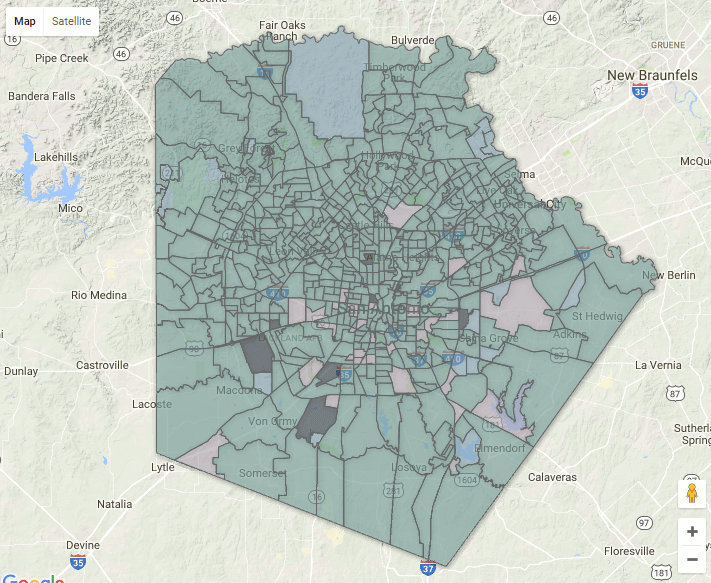
We ended up selecting the five Texas counties with the largest populations, mapped the wrong-way accidents with Google Fusion Tables, and then eyeballed each location to make sure it actually occurred on a major highway. Here’s how the finished product looked for Bexar County:

It took hours of work but the result was a set of specific crashes we were looking for. And the final numbers were surprising — Bexar County ranked high in wrong-way accidents for the years 2007-2011. It even had more crashes than Dallas County, which is more densely populated and has more traffic. To our knowledge, no one has done this kind of comparison in recent years.

If you work for a news organization and you’re jumping into data journalism (and you should be), it’s a good idea to share your methodology and findings with the government employees who oversee the data. You don’t want to be surprised by an error they catch after the story is published. And it gives the agency a chance to respond if your findings cast the agency in a harsh light.

It was certainly surprising to learn Bexar County ranked so high. The other surprise was how long the deadly problem flew under the radar. Despite several high-profile, deadly wrong-way crashes, local officials didn’t start talking about ways to prevent them until the summer of 2010.

To learn more, check out our two-part series about wrong-way crashes. And check back here when we see how the pilot program is working to stop wrong-way drivers.